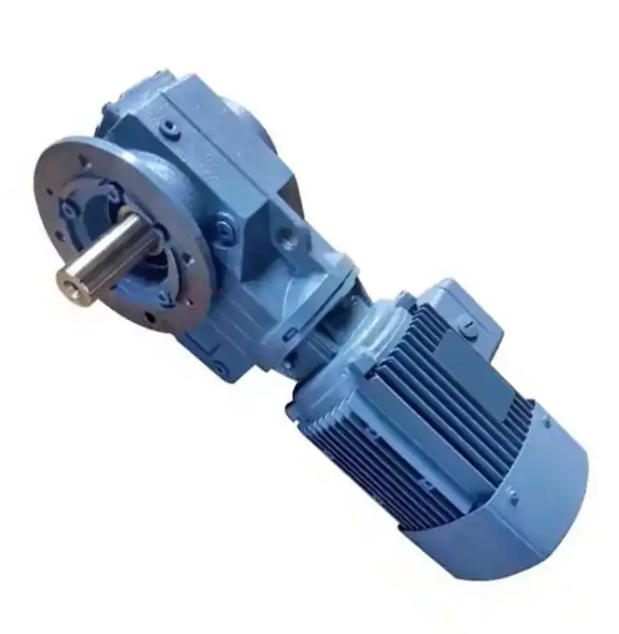
When the oil level is 10 mm or more below the center line of the oil level plug, the oil stirring ability of the gear rotation is insufficient, and sufficient oil mist coverage and oil flow erosion cannot be formed. The core impact is concentrated on insufficient lubrication and increased component wear. The specific manifestations are:
1. The key friction pair lubrication fails, and wear/gluing failures occur frequently.
Gear meshing surface: When the oil level is too low, the gear tooth top cannot be fully immersed in the oil, and the amount of oil mist brought up during rotation is greatly reduced, making it difficult to form a continuous and stable oil film on the meshing surface. In the early stage, there will be slight pitting and scratches on the tooth surface. As the running time increases, the oil film will completely break down and the metal on the tooth surface will be in direct contact, causing tooth surface gluing and peeling. In severe cases, tooth fracture will occur, leading to transmission failure of the reducer.
Bearing components: The lubrication of bearing rollers and raceways relies on splashing oil flow. When the oil level is insufficient, there is not enough oil infiltration on the inside of the bearing end cover. The rollers are in a boundary lubrication state, and the running resistance increases. The surface of the rollers will appear pitted and peeled. The bearing clearance will gradually become larger, accompanied by obvious 'sand' abnormal noise, and eventually the bearing will lock, causing the shaft system to become stuck.
2. The operating temperature rises abnormally and accelerates the aging of lubricating oil.
Insufficient lubrication will cause the mechanical friction resistance of the friction pair to increase sharply, which will be converted into a large amount of heat, causing the operating oil temperature of the reducer to rise rapidly. Normal operating oil temperature should be ≤80°C. When the oil level is too low, the oil temperature can rise to above 90°C, or even exceed 100°C.
High temperatures will accelerate the oxidation and deterioration of lubricating oil, causing the viscosity of the lubricating oil to decrease and the additives to fail, further reducing the lubrication effect and forming a vicious cycle of 'insufficient lubrication → rising temperature → oil deterioration → even more insufficient lubrication'.
3. The oil mist is unevenly distributed, resulting in local lubrication dead corners.
There are multiple gear pairs and bearings inside the KF87RF57 reducer. When the oil level is too low, the splashing oil mist can only cover the parts close to the oil surface. High-speed shaft bearings, upper gear meshing surfaces and other parts far away from the oil surface will become dead spots for lubrication. These parts are in a state of oil shortage for a long time, and the wear rate is much higher than other parts, becoming the 'weak point' of equipment failure.