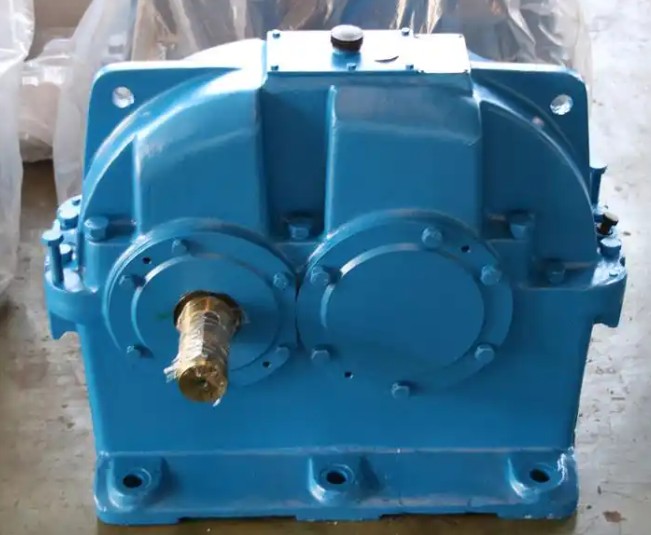
The advantages and disadvantages of hard tooth surface reducer and soft tooth surface reducer are as follows:
1. Advantages and disadvantages of hard tooth surface reducer
1. Advantages:
(1) The tooth surface has high hardness, generally above HRC58, has excellent wear resistance, can withstand higher contact stress and impact load, and has a load-bearing capacity 2-3 times higher than that of soft tooth surface reducers of the same specification. It is suitable for heavy-load, high-speed, and frequent start-stop conditions.
(2) The transmission efficiency is high, reaching 96%-98%. The tooth surface has been quenched and ground, with high tooth profile precision, small meshing clearance, lower vibration and noise during operation, and strong operating stability.
(3) Long service life. Under the conditions of standardized lubrication and maintenance, the service life can reach 10-20 years, which is much higher than that of soft tooth surface reducers, which can reduce the frequency of equipment replacement and shutdown maintenance.
(4) Compact structure, with the same load capacity, the volume and weight are 15%-30% smaller than soft tooth surface reducers, saving installation space and adapting to a variety of compact equipment layouts.
2. Disadvantages:
(1) The manufacturing cost is high. The tooth surface needs to go through multiple precision machining processes such as quenching, tempering, and grinding. The production equipment and process requirements are strict. The raw material and processing costs are 30%-50% higher than that of the soft tooth surface reducer.
(2) The requirements for installation accuracy are high, and the tooth shape accuracy is high. If the coaxiality and parallelism deviation are too large during installation, it will easily lead to local stress concentration on the tooth surface, causing pitting corrosion, tooth breakage and other faults, and the installation and debugging cycle will be longer.
(3) The ability to resist overload and impact is weak. Although it can withstand conventional impact loads, when encountering extreme overload or unexpected impact, chipping and cracks are prone to occur on the tooth surface, and repair is difficult. Generally, the gear set needs to be replaced.
(4) Maintenance costs are high. During operation, the extreme pressure and anti-wear properties of lubricating oil are strictly required, and oil quality indicators need to be monitored regularly. Fault detection requires professional testing equipment, and the maintenance technical threshold is high.