What are the common assembly problems of R57-48.23-0.55KW gear reducer?
Author: Site Editor Publish Time: 04-03-2026 Origin: Site
Inquire
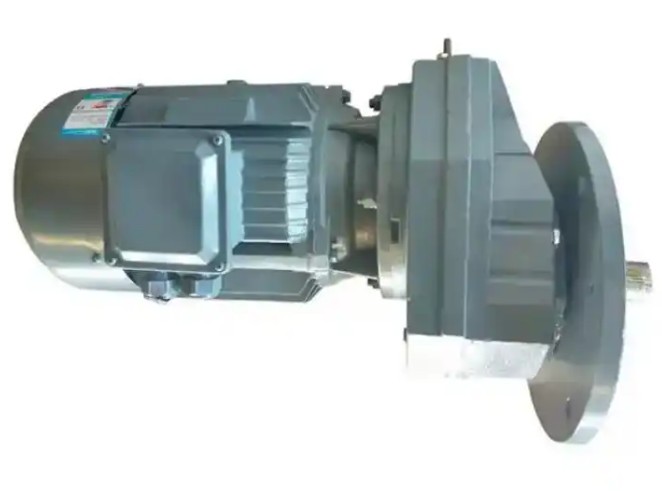
Common assembly problems of R57‑48.23‑0.55KW helical gear reducer, from high to low frequency of occurrence, are as follows:
1. Improper bearing assembly
The bearing is not pressed in place and the inner ring/outer ring is deflected, causing abnormal clearance.
If the bearing preload is too large, it will run tight, heat, and squeal.
The bearing is installed backwards (the sealing surface faces the wrong direction), resulting in early wear, dust and oil leakage.
2. Poor gear meshing accuracy
The axial positioning of the gear is inaccurate, the meshing is unevenly loaded, and only one side is engaged.
The gear gaps at all levels are too large or too small, causing impact sounds or friction squeals.
The gear is installed backwards and the keyway is misaligned, causing abnormal vibration and noise.
3. Assembly deviation of input and output shafts
The shaft, gears, and bearings have improper interference, loosening or seizing.
The output shaft oil seal is installed tilted and not in place, causing oil leakage.
The stress point of the bearing is eccentric, the running vibration is large, and the noise increases with the rotation speed.
4. Assembly problems of end caps, blanking caps and glands
The end cover bolts are not tightened diagonally evenly, causing slight deformation of the box.
The positioning pin is missing or loose, causing the gear center distance to deviate.
The gasket is damaged, missing or unevenly applied, causing oil leakage.
5. Poor coaxiality and alignment (most common in external assembly)
The input shafts of the motor and the reducer are not concentric, and the coupling is not strong.
The output shaft is not axial with the load, causing excessive radial force.
The base is uneven and the gaskets are uneven, causing slight deformation of the box and poor gear meshing.
6. Assembly problems of keys and fasteners
The flat key height is inappropriate and the fit is too loose/too tight.
The bolts are not tightened and the spring washers are missing. They become loose after operation and produce impact sounds.
The locking nut is not locked and the high-speed end is easy to unbuckle.
7. Lubrication and assembly environment issues
Foreign objects (iron filings, impurities) are not cleaned during assembly, causing strain and abnormal noise.
The bearings were not pre-lubricated and were damaged by dry wear at startup.
Too much or too little oil can cause heat, noise, and oil leakage.
8. Wrong installation direction and structural assembly
The horizontal/vertical installation method is wrong, and the oil level and breather cap position are wrong.
The output bearing has been subjected to a large radial force, which exceeds the allowable range of R57, resulting in early failure of the bearing.