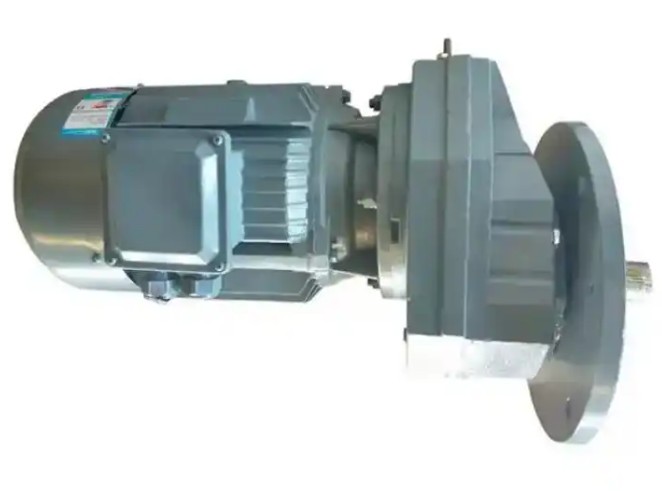
The regular inspection records of bearing temperature of TY125 hard tooth surface reducer should contain the following key information to ensure that the operating status of the equipment can be traced, abnormalities can be warned early, and maintenance can be based on:
1. Basic equipment and environmental information
Equipment model : TY125 hard tooth surface reducer
Installation location : Such as 'Production Line 3 of Main Transmission Workshop'
Check date and time : Accurate to the minute for easy trend analysis
Ambient Temperature : Record the ambient temperature (such as 25℃) during measurement, used to calculate temperature rise
Operating conditions : Load status (no load/25%/50%/75%/full load), continuous operating time
2. Temperature monitoring core data
Measuring point location : clearly marked as the bearing end cover of the input shaft, output shaft or intermediate shaft
Actual temperature value : Use an infrared thermometer to measure the surface temperature of the bearing outer ring or end cover
Maximum allowable temperature : generally not exceeding 80℃
Temperature rise : It is recommended to control it within 40℃
Historical baseline comparison : Compare with the baseline temperature during normal operation of the equipment, the deviation exceeds 15℃
3. Auxiliary status observation items
: Whether it is accompanied by abnormal vibration (can be measured with a simple vibrating pen, double amplitude ≤ 0.05mm)
Noise characteristics : Is there any abnormal noise such as metal friction and knocking?
Sealing status : Is there any leakage or accumulation of oil stains at the oil seal?
Lubrication condition : Whether the oil level is within 1/2 to 2/3 of the oil window, and whether the oil quality is clean and non-emulsified
4. Operation and judgment records
Measurement Tools : Such as 'FLUKE 62 Max+ Infrared Thermometer'